
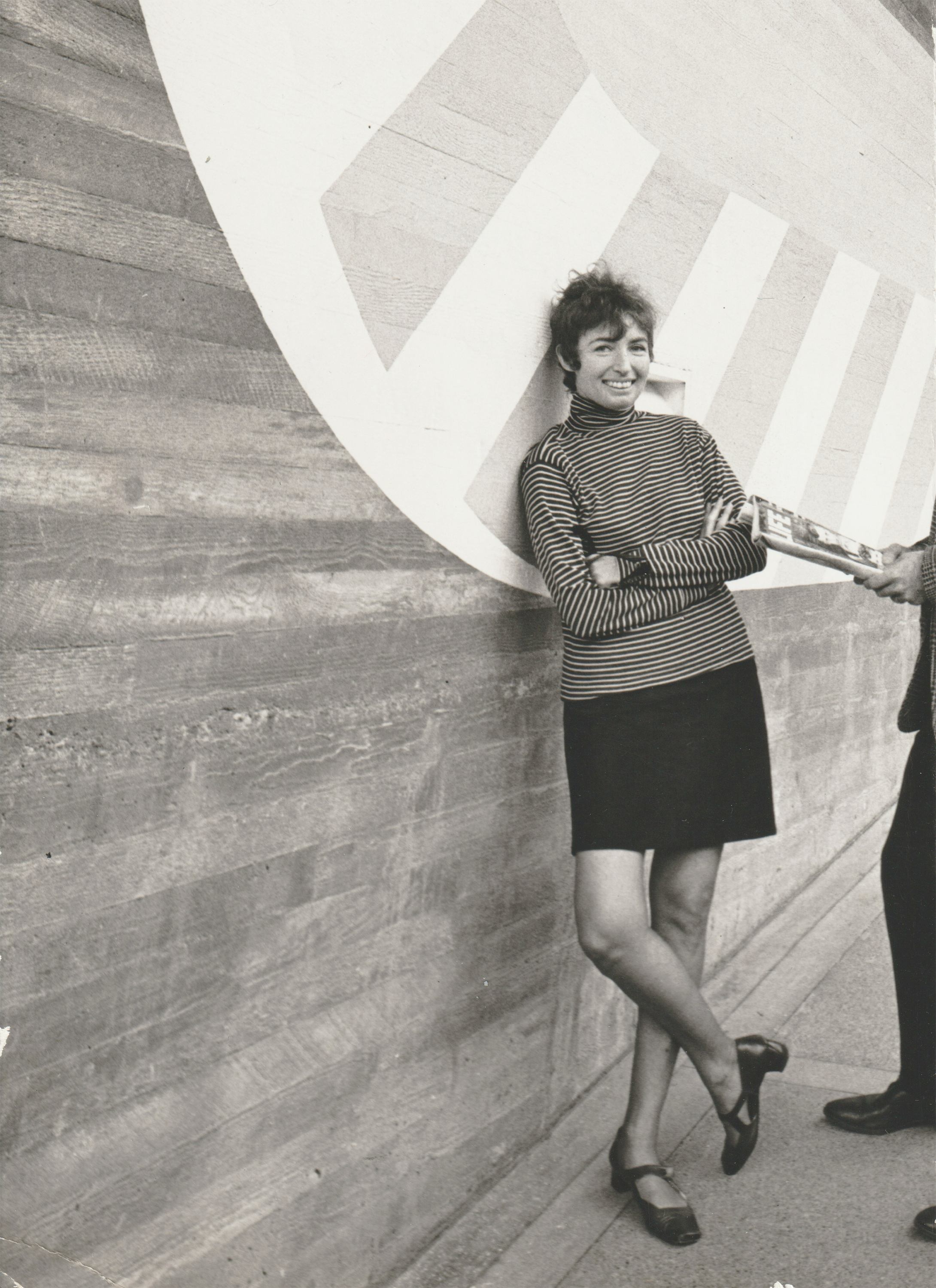
“FOR ME, IT WAS JUST WALLS.
I WAS A PAINTER,
AND I PAINTED WALLS.”
Barbara Stauffacher Solomon (1928–2024) was a visionary American artist and designer whose work across painting, drawing, design, and architecture transformed how art defines and inhabits space. Internationally recognized as the originator of Supergraphics—monumental wall paintings that merge art and architecture—she was, above all, a painter and thinker whose formal rigor, wit, and conceptual clarity shaped modern visual culture.
A third-generation San Franciscan, she studied painting with David Park at the San Francisco Art Institute and Hans Hofmann at the Art Students League in New York, then trained in design under Armin Hofmann at the Kunstgewerbeschule Basel in Basel, Switzerland. Returning to California in the 1960s, she introduced Helvetica to the United States and developed a modernist sensibility that fused European precision with West Coast experimentation.
Stauffacher Solomon conceived her Supergraphics at The Sea Ranch (1964) alongside lifelong friend and collaborator, landscape architect Lawrence Halprin, and achieved great acclaim with subsequent public projects including Promenade Ribbon (1995), San Francisco Embarcadero with Vito Acconci and Stanley Saitowitz, and Turia Gardens (1996), Valencia, Spain with Ricardo Bofill.
Her work has also been featured at the Whitney Museum of American Art, High Styles: Twentieth-Century American Design, (1985), the Venice Biennale (1972), Walker Art Center (1986–88), SFMOMA (Visionary San Francisco, 1990; Barbara Stauffacher Solomon, 2019; KLEE + BSS, 2023), BAMPFA, Land(e)scape, (2018), LAXART, Relax Into the Invisible, (2019), the Palm Springs Art Museum, Breaking all the Rules, (2019), the Scottsdale Museum of Contemporary Art, BEYOND: Works by Nellie King Solomon and Barbara Stauffacher Solomon, (2020-2021), the Graham Foundation, Exits Exist, (2022), and MarinMOCA, SUPER-SILLY-US, (2023).
She later studied architecture at UC Berkeley, publishing Green Architecture and the Agrarian Garden (1988), and received the 1983 AAR/NEA Fellow in Architecture, Rome Prize, and an NEA Distinguished Design Fellowship.
A dedicated educator at institutions including UC Berkeley, Harvard, Yale, ILAUD, California College of the Arts, and the San Francisco Art Institute, Stauffacher Solomon left an enduring legacy that continues to inspire artists, designers, and architects alike.
Stauffacher Solomon’s monumental Supergraphic, Strips of Stripes (2023), is currently on view at the San Francisco Museum of Modern Art. Institutional attention continues in 2027 with a solo exhibition at Yerba Buena Center for the Arts, inclusion in Made in San Francisco at the de Young Museum, which examines the pivotal role of the San Francisco Art Institute (1945 - 1969)—where she was both student and professor—in shaping postwar American art, and a new permanent public art commission as part of the San Francisco Arts Commission's Streetscape Project.
Selected public collections include the Berkeley Art Museum and Pacific Film Archive, Berkeley, CA; Cooper Hewitt, Smithsonian Design Museum, New York, NY; Los Angeles County Museum of Art, Los Angeles, CA; San Francisco Museum of Modern Art, San Francisco, CA; and the Walker Art Center, Minneapolis, MN.
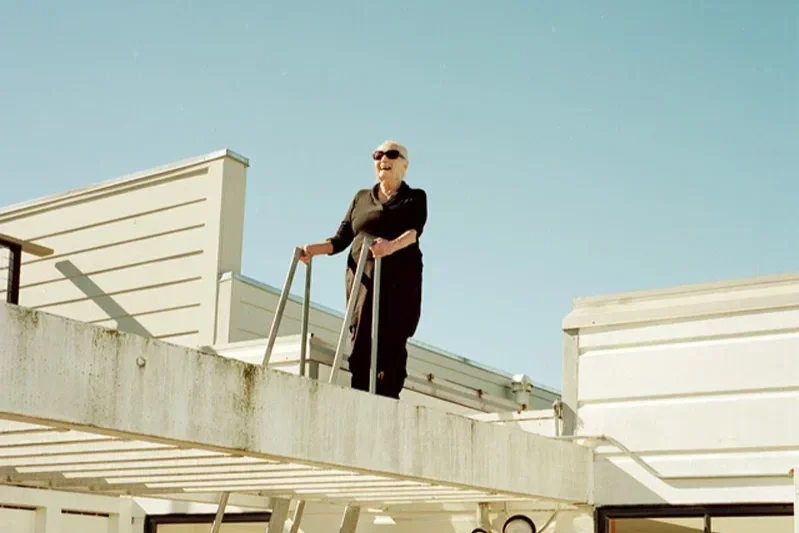
⬇
Read
⬇
Interview with Hans & Bobbie
⬇ Read ⬇ Interview with Hans & Bobbie
“When I think of Barbara Stauffacher Solomon …
I think first of her unwavering belief in art as an open
invitation to see and make sense of the world anew.”
–– Hans Ulrich Obrist
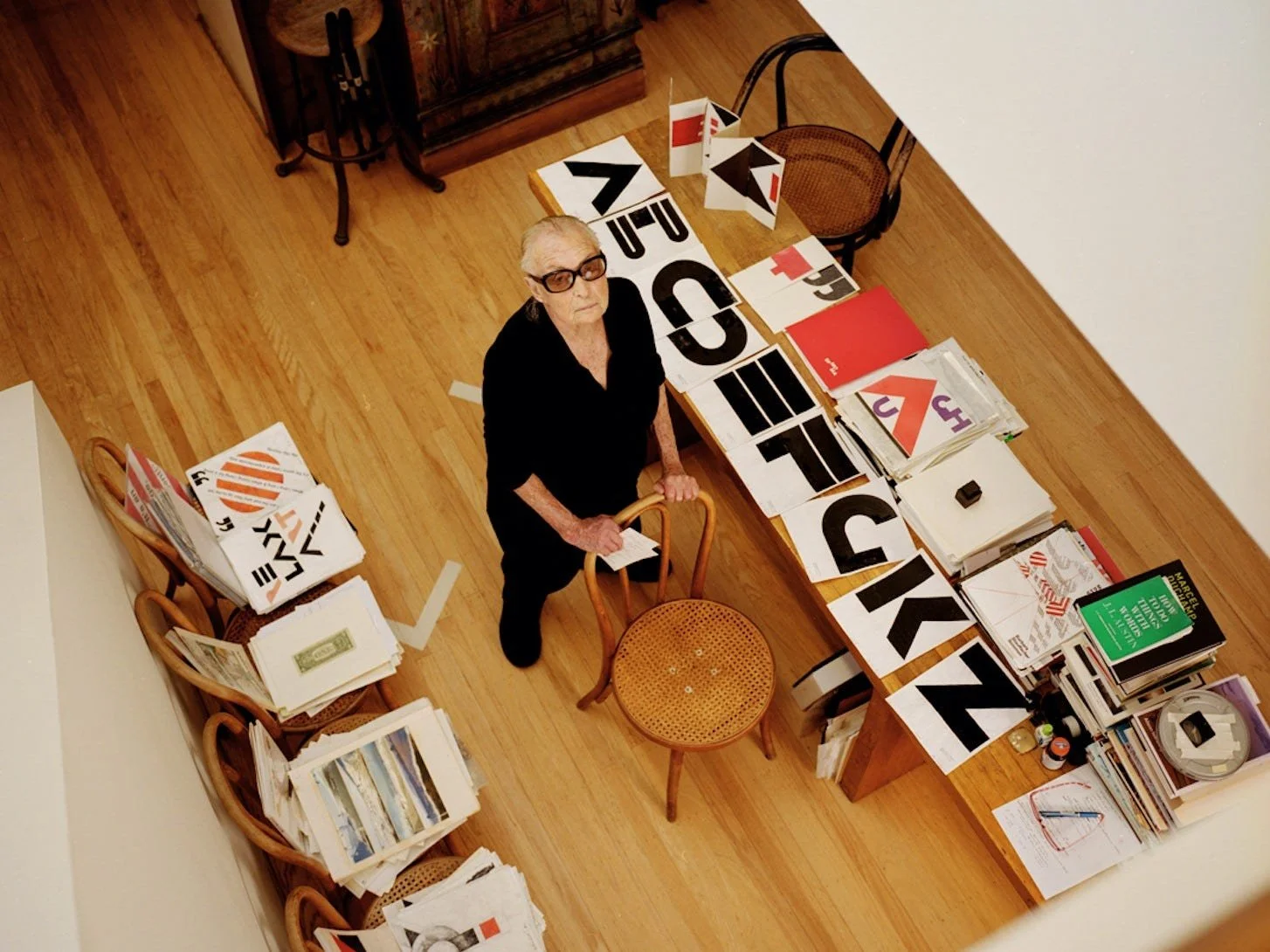
Stay in Touch
Join our mailing list for updates on Barbara Stauffacher Solomon exhibitions, events, and news.
The Barbara Stauffacher Solomon Estate is represented by:
Anthony Meier, Mill Valley, California gallery@anthonymeier.com
von Bartha, Basel, Switzerland info@vonbartha.com
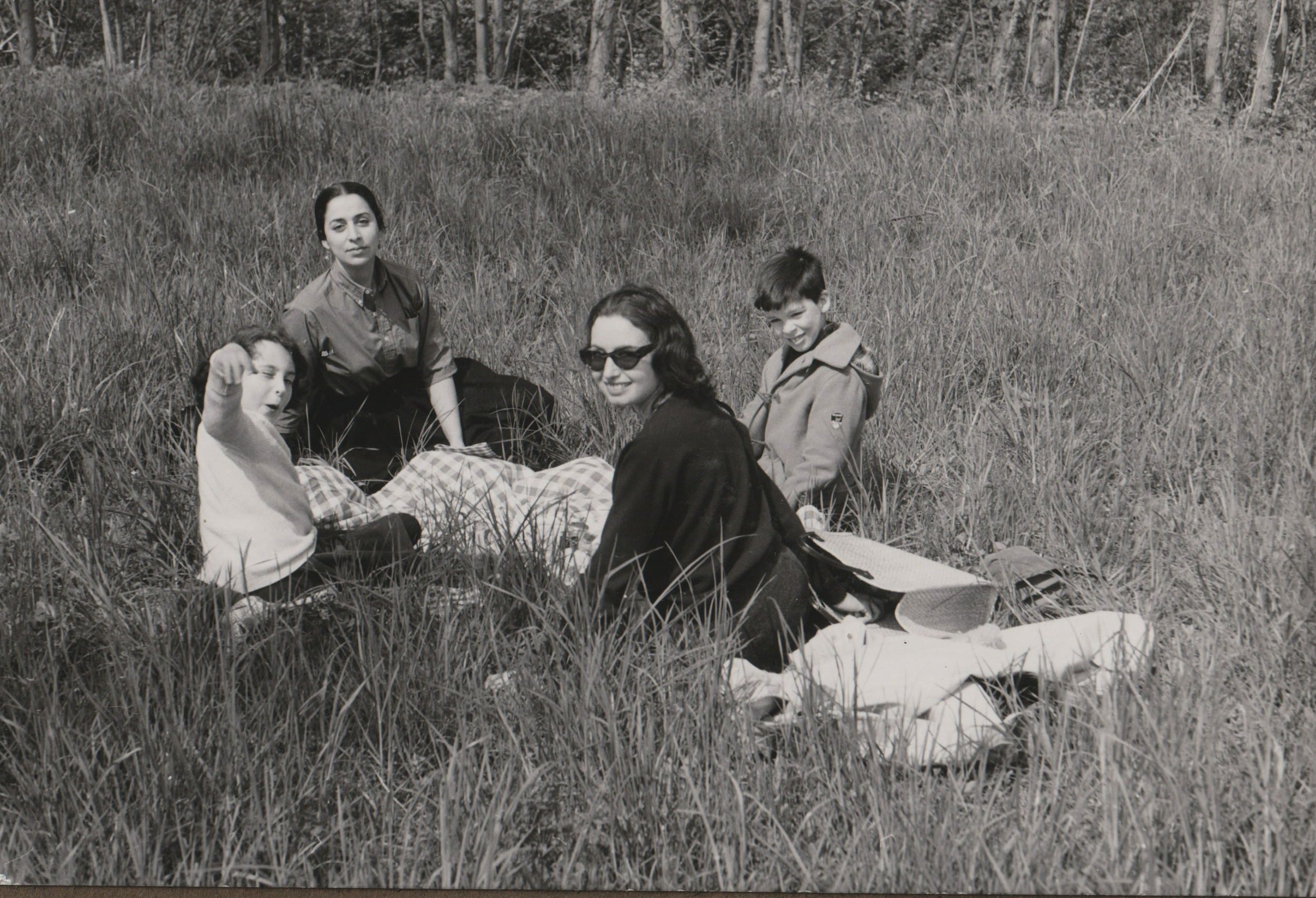
Barbara Stauffacher Solomon
in Conversation with Hans Ulrich Obrist
“When I think of my friend Barbara Stauffacher Solomon, or Bobbie as I came to know her, I think first of her unwavering belief in art as an open invitation to see and make sense of the world anew.
In our many conversations—one of which is published, for the first time, below—she returned again and again to the philosophy that art is for everyone, and should not be limited to the confines of a museum.
Her Supergraphics, those monumental, wall-spanning signs, merge the disciplined clarity of Swiss modernism with the sun-drenched expansiveness of California, forming a language that operates simultaneously as painting, architecture, and public gesture.
Bobbie’s path—from young single mother in the Bay Area to Basel, where she studied with Armin Hofmann, and back to the West Coast, where she transformed Helvetica into an architectural force of art—unfolds like the plot of a film. And still, her work remains profoundly grounded: bold, generous, and insistently present in everyday life.” —Hans Ulrich Obrist
The following conversation took place on February 12, 2019, at Bobbie’s home in San Francisco. It has been edited for length and clarity.
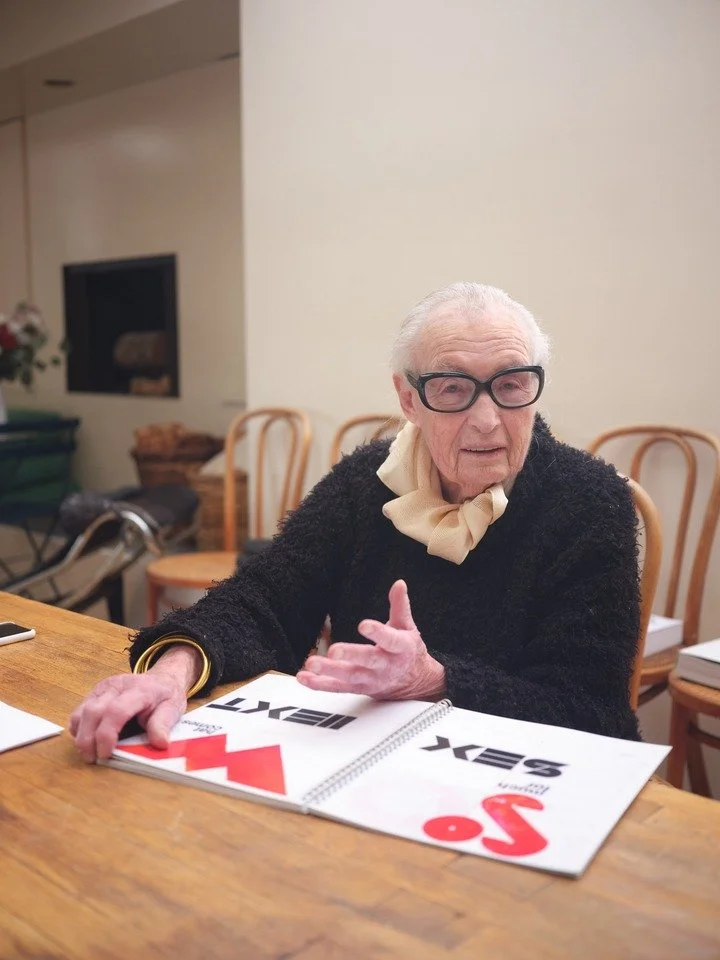
HUO: Before becoming a graphic designer, you started as a ballet dancer, no?
BSS: My mother and father got divorced, and she needed to make some money. She was a spoiled rich girl; the only thing she knew how to do was play the piano. She got a job playing the piano at the San Francisco Ballet School, so she stuck me in all the classes to babysit me.
HUO: At 17, you met your future husband Frank Stauffacher, the Swiss filmmaker.
BSS: Yes. He made experimental films. But he died. He was lovely.
HUO: He died so young.
BSS: Yes. He was so handsome, but he was also brilliant, and people loved him. After he died, I had to make some money. That's when I went to Switzerland and studied graphic design under Armin Hofmann. Armin and his wife Dorli were marvelous to me.
HUO: Can you tell me about your memories of Hofmann?
BSS: He was great. I went to Zurich first, and there, someone said, “You're just a dilettante American. Learn German and come back.” I didn't know what to do. I had my little kid Chloe with me and my mother. I phoned Armin, and he and his wife met me at the train station with chocolates. They found me an apartment, right on the Rhine. He told the director of the Basel School of Design that I could speak German —which I couldn't—and he got me in. He saw my predicament, and he was marvelous.
HUO: He was a rigorous Swiss designer. What did you learn from him?
BSS: Yes, he was. That's why, when I came back to the Bay Area, and I did all the signs at the Sea Ranch, I just did it for Armin. Everything I did, I did it as if Armin were standing behind me saying, 'No’, or ‘prima.'
HUO: Prima?
BSS: If you got a 'Prima' out of Armin, that was hot stuff.
HUO: What are these drawings here? There's a lot of white on the page.
BSS: That's the essence of the page: space, that's Swiss, that's Armin. Armin would love my new book with all that wonderful, magical white space, and the grid, that's just total Armin.
HUO: And your diagonal stripes. How did they come to be?
BSS: I do that everywhere. You know what that is? In Switzerland, when you go on the highway, there are all those big stripes on the backs of trucks. It's that.
HUO: You’ve said that you worked with T-squares with Armin.
BSS: Yes, we worked with T-squares. There were no computers. We worked with pencils, pens, black ink, and whiteout.
HUO: Was there a spirit of the Bauhaus in the work?
BSS: In some funny way, yes, but it was Swiss. It wasn’t German Bauhaus. They really believed in using Helvetica to tell the truth, and that sunlight and air would make people happy, so they wouldn't revolt.
HUO: It was a whole belief system.
BSS: Yes. Socialism. That's why I could never call myself an artist, because everybody was equal.
HUO: You’ve said that Armin also had a very democratic idea of art: Art for the people.
BSS: Totally. Art for the people. His posters on the street were art for the people. It was all socialism. I call design ‘visual propaganda.’ That's what I learned from Armin. In a way, it worked, because the gap closed, and now everybody dresses kind of alike. You can't tell a rich person from a poor person.
HUO: Did he also teach you logos?
BSS: Of course. It was all lettering. For one year, all we did was the Helvetica alphabet. He trained us, and I'm still doing it.
HUO: It's interesting, this universal language learned from Armin Hofmann. It was already there with Sibyl Moholy-Nagy when she said, 'Abstraction is the
universal language.'
BSS: She said all kinds of audacious things. You know, she’d been a stripper in Berlin before that. She was a great cook. All the intellectuals who had fled to the Bay Area and were teaching at Berkeley would come to her parties. She was a good friend. She was funny. Raunchy. I'd go to New York and stay with her. I went there once, and I got a job with George Nelson, and she was amazed because she
thought she was the only smart woman in the world capable of doing anything, but then I was too.
HUO: Before you met Armin, you said that through Frank, you became connected to Dada? Can you talk about that? Because I'm from Zurich, the city of Dada.
BSS: Yes, I know. Frank would show Man Ray's movies at SFMOMA, and Man Ray would show up with Henry Miller and Hans Richter. I was 17, and I just took it all for granted. I just followed Frank around. We knew a lot of the surrealists because they were hiding out from the war here. Everybody was so erudite, and I was scared to open my mouth.
HUO: I’m very good friends with Luchita Hurtado.
BSS: You are? Luchita's my best friend. We talk to each other all the time. Her first husband, Lee Mullican lived with Frank and Frank’s brother Jack, so when Luchita married Lee, we were very close. Luchita's ten years older than I was, and when I met her, I was 17 and she was 27. She was the most glamorous thing on Earth. She's been my friend ever since.
HUO: Was she always painting?
BSS: Not so much, no. She's painting more now. Those were the days when guys, even Lee, didn't treat her seriously as a painter. She could cook dinner, and she could be a beautiful woman, and she could talk...
HUO: Luchita told me that when she and you started, it was difficult for a woman to be taken seriously as an artist?
BSS: Yes. That's one reason why I became a graphic designer. I had to make money, because I didn't have a husband, and women artists weren’t making any money. Luchita still had the pretense of being an artist, but I don't think she painted at all while she was married to either Lee or to her second husband Wolfgang Paalen.
HUO: You came back from Switzerland to the United States in 1962. You said you listened to the Armed Forces radio station and heard Kennedy. Did Kennedy lure you back?
BSS: Yes. Also, I was having troubles... You must know Heinz Hossdorf, the engineer? Heinz and I lived together for years. We had a big affair... Then he didn't marry me. He had a wife who’d left him, and a kid, and she was behind the Iron Curtain in Yugoslavia. She wanted to study medicine and then come back to Switzerland, but if he married me, then she couldn't do that, so I was the big woman
and said, 'Of course, let her study medicine and come back, and then we'll get married.' Meanwhile, we never got married. It’s interesting how politics affects people's lives.
HUO: When I came to San Francisco about 10, 15 years ago, my first visit was to visit Lawrence Halprin. I did a long interview with Larry, and I looked at all these beautiful drawings. You, of course, got your first job with Larry when you came back from Switzerland.
BSS: He was a big friend of Frank’s. He gave me an office, and he gave me the Sea Ranch work. He just handed it all to me. He liked me. I was 32 and beautiful, and all the men were nice to me, they all helped.
HUO: What did you do in Larry's office?
BSS: I had my own office downstairs. And I did the Sea Ranch.
HUO: There was a show on the Sea Ranch at SFMOMA, and now you have a new show at SFMOMA.
BSS: It opens in two weeks. It's a retrospective of my work from the early years. It starts with the calendars I did for the museum, and then it goes to green rectangles, my books, and drawings.
HUO: I have your first book in my hands, Green Architecture and the Agrarian Garden (1988). It’s filled with your “green rectangles.” Where did they come from?
BSS: They’re the green areas in the city plan of San Francisco.
HUO: How did you come up with the idea of Supergraphics?
BSS: The Sea Ranch needed something on the walls, but had no money, so I painted them. The word Supergraphics was coined by Progressive Architecture Magazine when they wrote about it. For me, it was just walls. I was a painter, and I painted walls.
HUO: You’ve said that it's a combination of Swiss graphics and Abstract Expressionism.
BSS: No, that's what other people called it. They call me “Swiss modernism plus California cool.” That's what people say now, which is fine, it's true. Because I'm still working in that Swiss way, and I’m such a Californian, too.
HUO: The Sea Ranch represented a very optimistic moment because it had this idea of a Kibbutz, a commune. It was a utopia. Do you think the Sea Ranch was a utopia?
BSS: Yes, but it ended up just being for the snotty rich. It was supposed to be a real town. When I first went up there, there was a shepherd with his sheep; that's all that was up there then. It was beautiful before they put those silly houses there. Now, it’s second homes or first homes for the entitled rich.
HUO: And for your Supergraphics, you used only natural materials, right?
BSS: That's why I painted inside, I didn't paint the outside. You want to look at the view, you want to look at the Pacific, and the hills. You don't want to look at my stripes. So, I put everything inside.
HUO: When you painted the interior, how did you start? Did you make any drawings before painting the walls?
BSS: No, I didn't. The architecture was so complicated, it was all these rooms and funny shapes. I started with this wave.
HUO: The wave was the first thing you did?
BSS: The wave was the first thing. It was just like painting a big, huge painting: you start some place, then you move, one thing relates to another, and that relates to something else. And then it’s done.
HUO: You also drew the logo for the Sea Ranch: two simplified seashells, back-to-back, connected into a ram's horn. Can you tell me about that? Did you hand-draw the logo?
BSS: I got the idea, and then I brought out all my Armin training. I’d start making shapes—that's Armin training—and just started drawing it. Straight lines and wiggles, everything was a derivation of a letter form.
HUO: Then there was this idea of the tennis club, because Charles Moore and Bill Turnbull Jr. had designed a swimming and tennis club.
BSS: Yes, it was just rough plywood and they hired me to fix it. We painted it white and then I painted all this stuff on it. I wasn't thinking, I was just painting. I was just a painter, painting. If I was thinking at all, it was just about taking the painting out of the frame and letting it go from wall to wall, not being kept in by a frame.
HUO: When you got invited to work on the Sea Ranch, you went to Thomas Swanson’s, a sign-painting shop, and chose bullseye colors from a lettering enamel color chart. That’s also what the Constructivists used.
BSS: Yes, that's one reason why I went to Basel: I liked the Constructivists.
HUO: What other projects did you do after the Sea Ranch?
BSS: After the Sea Ranch, I got married to Dan Solomon. I decided to go back to school. My first husband Frank had all these fancy friends I would never dare open my mouth around, and my second husband would say I was smart, but not educated. So I went back to Berkeley, and I got a degree in History and Philosophy, and then a Master’s in Architecture. I had my kid, Nellie, and I started writing books. After I learned to write at Berkeley, I learned to use words, I learned to think. Before
that, I was scared to open my mouth. That's when I became more interested, really, in writing. I knew I could draw. But writing became very interesting.
HUO: Can you tell me about drawing in your work? Do you still draw a lot?
BSS: Well, I mean, I was an art student. And I started with art, sure. I knew how to draw when I wanted to. I was very well trained at the San Francisco Art Institute, when it was the School of Fine Arts. I’d been drawing since I was a little kid. But for the Supergraphics, everything was much more hard-edged. It's different. And that's why I like it.
HUO: Vito Acconci and you collaborated on a big project. Can you tell me about it?
BSS: It's the Ribbon of Light. It goes for two and a half miles along Embarcadero in San Francisco. It's a sculpture, but the whole idea was that you couldn't see it. It was pieces of the sidewalk rising to become benches and tables. But if you didn't know that it was supposed to be art, you just sat on it. Concrete would rise up from the sidewalk and become art.
HUO: So it's invisible?
BSS: Yes, it really is. Because Vito and I didn't want it to be one of those pieces of ugly public sculpture that are all over the place.
HUO: Do people walk through it?
BSS: Or they sit on it. And trucks have bumped into it, and crazy people have come at night with hammers and destroyed it. In lots of places, people have just removed parts of it. And it's falling apart.
HUO: Do you have any unrealized projects? Dreams?
BSS: Like every kid in art school, there were buildings that I would design that were never built, and every time I walk by some place, I think, “Wouldn't that be nice there?” But no, I mean, I had to make money to support my kids, so I was doing any job that came to me, but I was lucky because when I came back to America, SFMOMA had me doing their bulletins, and I was working for all the architects. They let me do anything I wanted, and I did it as if I were still in Armin's class. I was able to do most of the jobs as if I were still an artist.